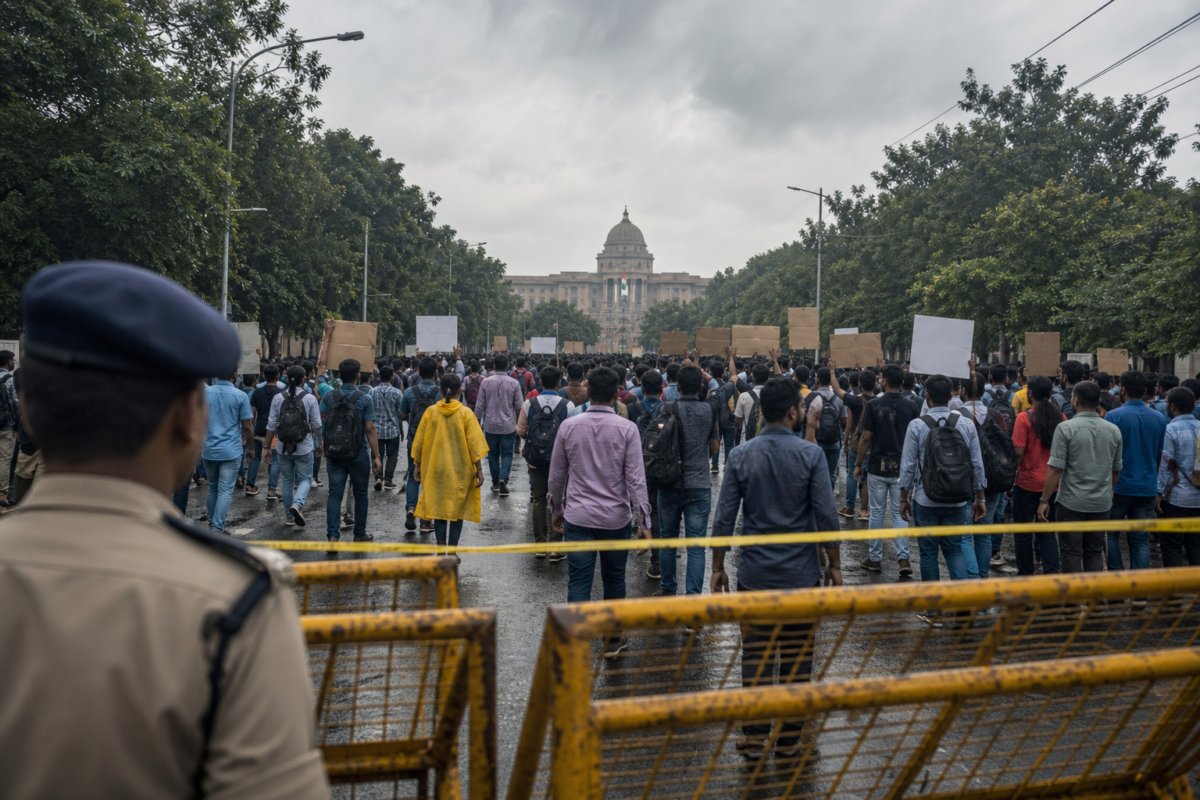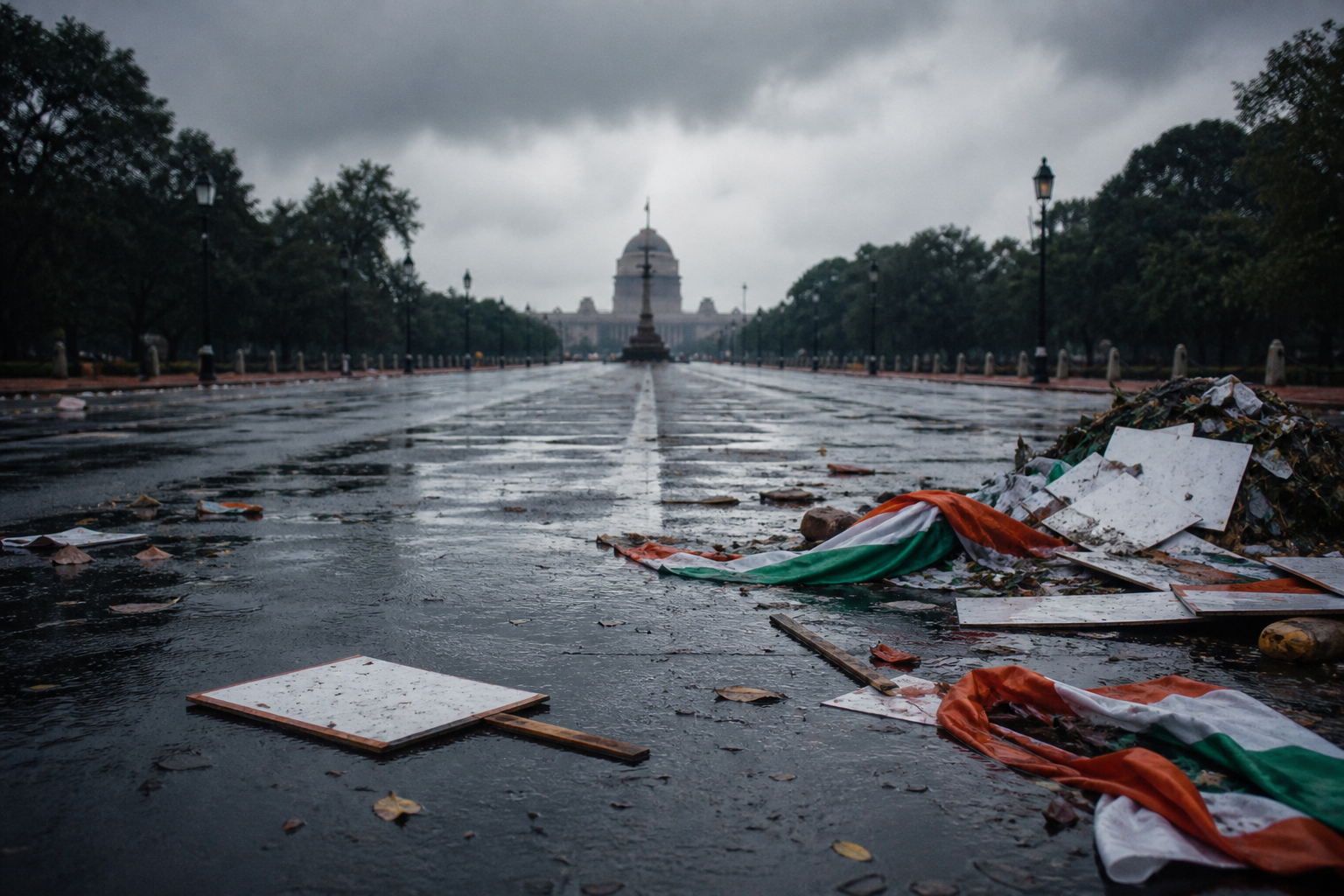
The Jharkhand Vidhan Sabha March lathi charge became the defining image of Ranchi’s student agitation on August 10, 2026. As thousands of JPSC–JSSC job aspirants tried to reach the Assembly during a “Vidhan Sabha gherao,” police used water cannons, tear gas shells and batons after demonstrators breached successive barricades.
Several protesters said they were injured. Officials reported policemen hurt as well. By evening, aspirants remained defiant—vowing to face batons again rather than drop their demand for a CBI probe into alleged recruitment exam irregularities.
What triggered the police action?
The march began around 10:30 am from outside the old Assembly building in Dhurwa as the protest entered its 17th day. It also coincided with Chief Minister Hemant Soren’s 51st birthday. Heavy security—including RAF, IRB, and district forces—lined a roughly 4 km route under prohibitory orders near the House.
Near Jagannathpur Temple, police first used water cannons. Videos showed some demonstrators dancing and waving tricolors under the spray. The confrontation sharpened when protesters pushed toward the final barricade. Tear gas was fired when the crowd came within about 200 meters of the Assembly, and batons followed as barricades were crossed.
Injuries, sit-in, and a third lathi charge
- Protesters alleged many students—including women—were hurt; some reports put hospitalizations in the dozen range
- Police said a minority of the crowd turned unruly and pelted stones; officers also reported injuries in the force
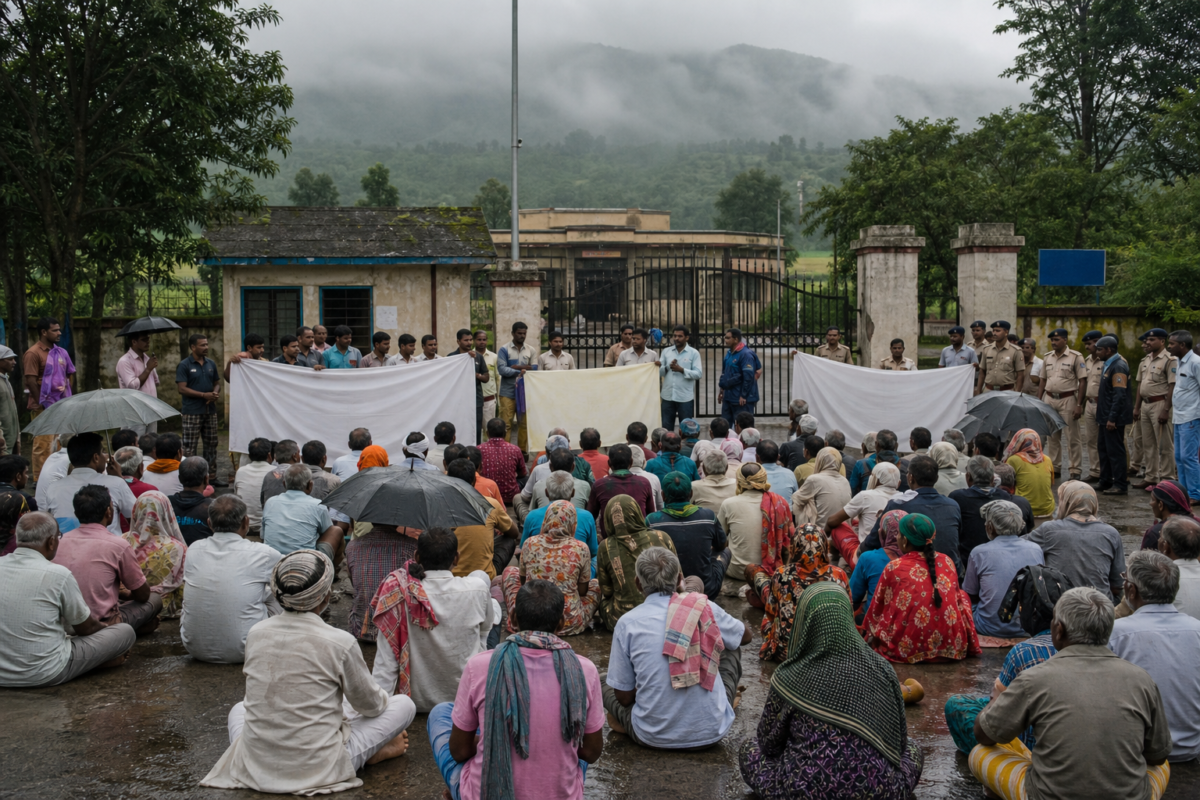
- Demonstrators reached near Gate No. 1 / Assembly premises and staged a sit-in
- Later in the evening, reports said police resorted to another (third) lathi charge to disperse the gathering
“We were protesting peacefully… Suddenly, the police launched a lathi charge.” — injured student protester, in media interviews
What police and leaders are saying
Ranchi officers defended “minimum” or “mild” force after attempts to cross the last barricade where Section 163 restrictions applied. Some officials later framed the pushback as crowd control rather than a formal lathi charge—a claim contested by videos and injured students.
JLKM leader Devendra Nath Mahto, on a multi-day hunger strike, joined the march and criticized rule by “batons.” MLA Jairam Mahto asked why peaceful students were restrained. Congress leader Rahul Gandhi condemned force against student protesters and urged dialogue.
Why the stir continues after the crackdown
The JPSC–JSSC Reforms Manch still wants:
- A CBI investigation (students distrust a CID-only probe)
- Cancellation of disputed exams, including contested JPSC/JSSC papers such as CGL-linked tests
- Broader recruitment reforms and transparency
The government has claimed it met most demands and pointed to CID/ED scrutiny and earlier JPSC resignations—but aspirants say batons and partial assurances cannot replace an independent central probe. For earlier context, see our pre-march security briefing and the day-15 deadlock explainer.
FAQ: Jharkhand Vidhan Sabha March Lathi Charge
Quick answers to the most-searched questions about the Ranchi police action, injuries, and what students want next.
Did police lathi-charge students during the Vidhan Sabha march?
Yes. On August 10, 2026, in Ranchi, police used water cannons, tear gas, and lathi charges as JPSC–JSSC job aspirants breached barricades while trying to reach the Jharkhand Assembly.
When and where did the Ranchi lathi charge happen?
The main clash unfolded on Monday, August 10, 2026, near Jagannathpur Temple and closer to the Vidhan Sabha. Further dispersal / a later lathi charge was also reported the same evening.
Were students or police injured?
Several protesters said they were injured; some reports mention hospitalization. Officials also reported policemen hurt. Police alleged a section of demonstrators turned unruly and pelted stones.
Did protesters reach the Jharkhand Assembly?
Yes. After crossing multiple barricades, aspirants reached near Gate No. 1 / Assembly premises and staged a sit-in before further police action.
Why did police say they used force?
Officers said force followed attempts to cross the final barricade inside a prohibitory zone and claimed part of the crowd became unruly. Student leaders insist the march was peaceful and condemn the baton charge.
What are JPSC–JSSC students demanding?
A CBI probe into alleged exam irregularities and paper leaks, cancellation of disputed recruitment exams, and systemic reforms in Jharkhand’s JPSC and JSSC process.
Has the Jharkhand government accepted the demands?
The government claims it accepted most demands and points to CID/ED scrutiny and JPSC resignations. Aspirants reject a CID-only probe and say a CBI investigation remains unmet.
Is the Jharkhand student protest over after the lathi charge?
No. Leaders say they remain defiant and will continue until core demands — especially an independent CBI probe — are met.