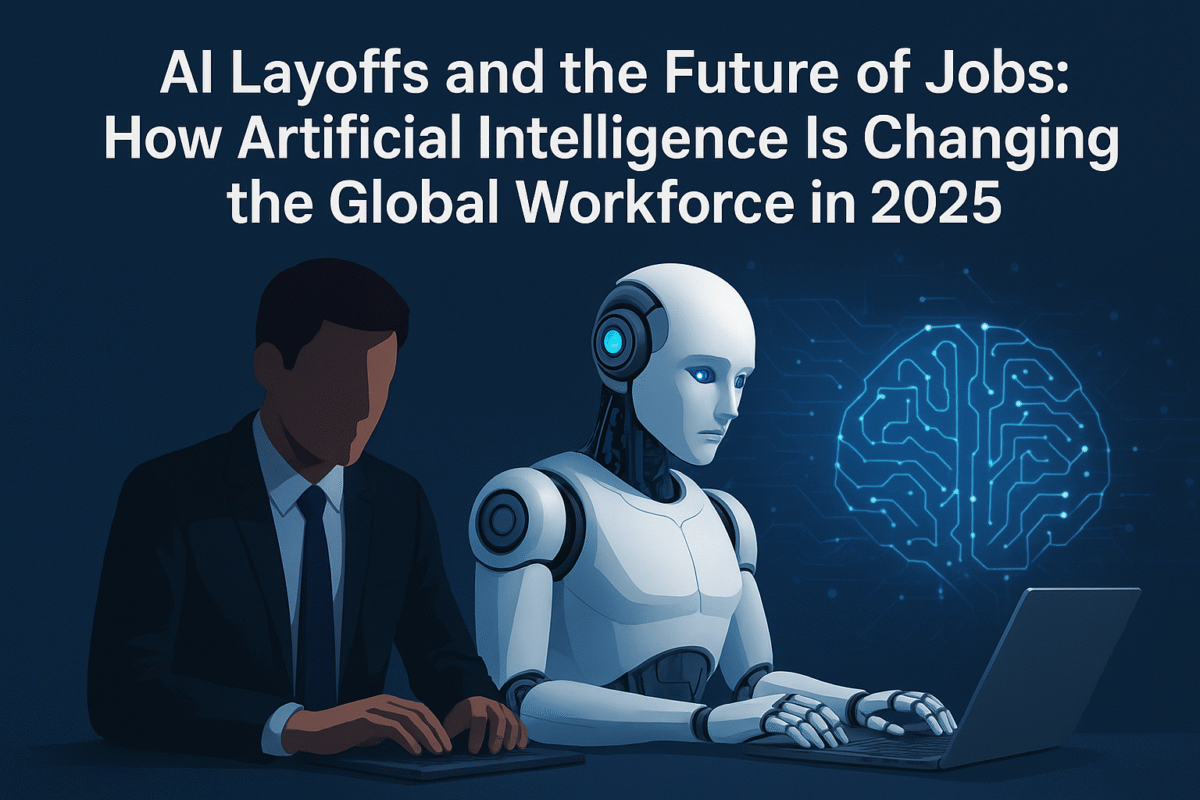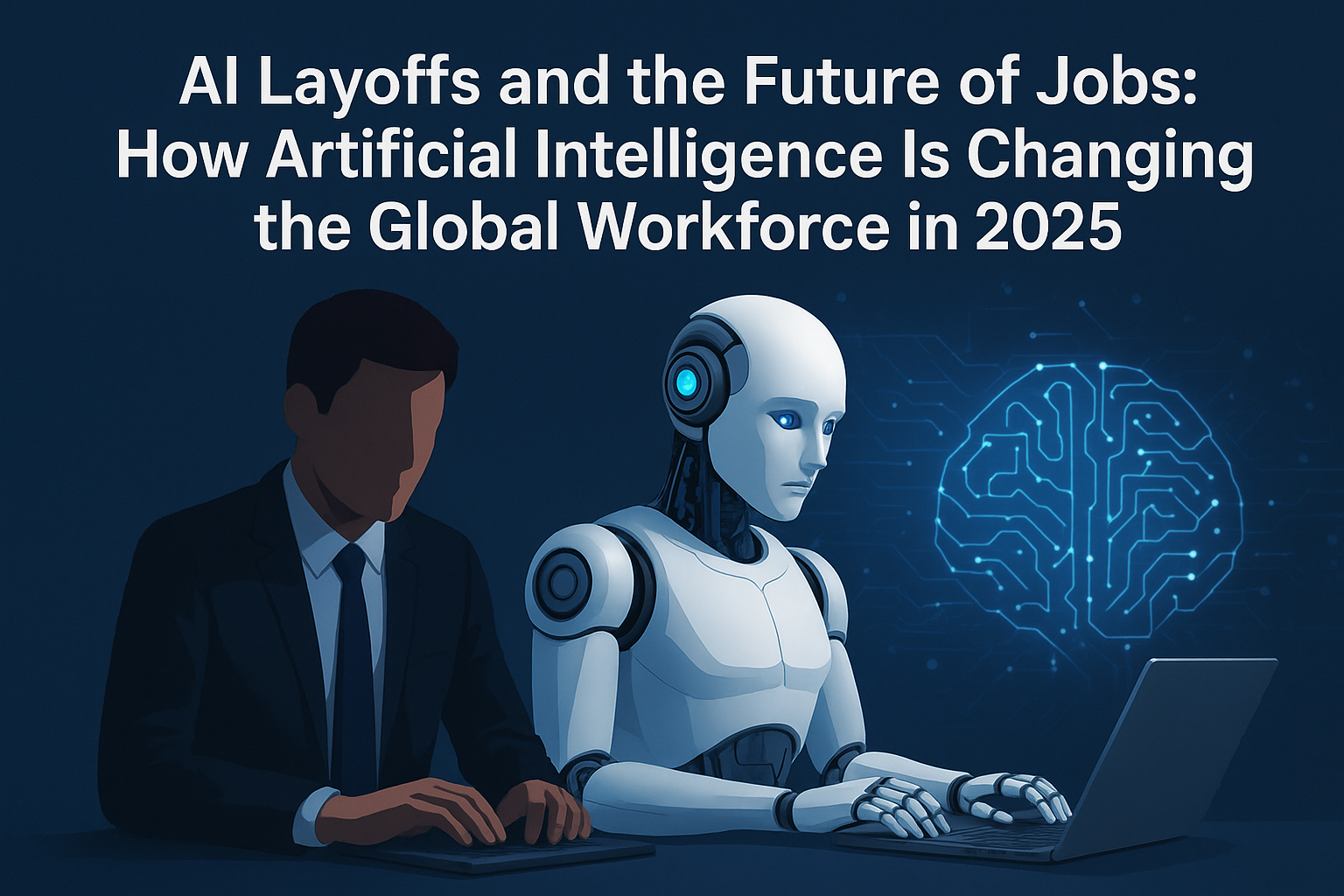
In 2025, artificial intelligence is rewriting the rules of business — and jobs. From Silicon Valley to Bengaluru, companies are adopting AI to streamline workflows, cut costs, and accelerate innovation. But with these changes comes a controversial side: AI-driven layoffs.
Thousands of employees across tech, finance, and even media sectors have been let go as automation and AI tools take over routine tasks. While the transition brings undeniable efficiency, it also raises critical questions:
👉 Will AI create more jobs than it destroys?
👉 What skills will define the future of work?
👉 And how can professionals adapt before it’s too late?
This article explores how AI is reshaping the global workforce — and what it means for every professional navigating the modern job market.
1. The Rise of AI-Driven Layoffs
In 2025, we’ve seen multiple headlines:
Major banks are automating customer service roles.
Newsrooms are experimenting with AI-generated reports.
IT companies are cutting project management staff as AI handles coordination tasks.
AI isn’t just a tool—it’s a strategic workforce shift. According to a report by McKinsey, up to 30% of tasks in white-collar jobs can now be automated with generative AI. That’s prompting companies to restructure entire departments.
However, not all layoffs are “bad news.” Many organizations are retraining employees for AI-assisted roles rather than removing them completely. The keyword here is reskilling.
2. Why Companies Are Choosing AI Over Humans
Businesses aren’t cutting jobs out of cruelty—they’re chasing efficiency, accuracy, and scalability. AI tools can analyze terabytes of data in seconds, generate reports instantly, and even write code or create designs with minimal input.
Some of the main reasons companies adopt AI aggressively include:
Cost reduction: AI systems cost less in the long run than full-time salaries.
24/7 productivity: Machines don’t need breaks, weekends, or holidays.
Error reduction: AI can minimize human mistakes in repetitive processes.
Faster innovation cycles: Companies can test, analyze, and deploy ideas faster with AI support.
The challenge? While businesses evolve quickly, the human workforce is struggling to keep pace.
3. Jobs Most at Risk in 2025
AI doesn’t replace all jobs — but it does transform many.
Here are some of the sectors currently most affected by AI disruption:
Customer Support: Chatbots powered by GPT-style AI are replacing first-level human support.
Content & Marketing: AI copy tools now generate blog posts, ads, and email campaigns.
Finance & Accounting: Automation tools handle reconciliation, auditing, and data entry.
Data Analysis: AI models quickly identify patterns that once took analysts days.
Coding & Testing: AI code assistants can generate, refactor, and debug code faster.
But with every job AI disrupts, new opportunities are emerging — especially in AI management, prompt engineering, ethics, and creative direction.
4. The New Skills Employers Want
In the new AI-first era, the value of a worker isn’t defined by their degree — but by their ability to adapt.
Top in-demand skills in 2025 include:
AI literacy: Understanding how to use and supervise AI tools effectively.
Data analysis & visualization: Making sense of AI-generated insights.
Critical thinking: Evaluating AI outcomes with human judgment.
Cybersecurity & ethics: Ensuring AI systems are safe and fair.
Prompt engineering & automation design: Communicating with AI models to achieve specific results.
5. The Human Edge—Why People Still Matter
Despite the headlines, AI can’t replace human creativity, empathy, or leadership.
Jobs requiring emotional intelligence, relationship management, strategic vision, and innovation remain highly valuable.
For example:
AI can write music, but it can’t feel emotion.
It can summarize data, but it can’t inspire a team.
It can recommend actions, but it can’t take responsibility.
The future of work belongs to professionals who combine technology and humanity—those who use AI as a partner, not a competitor.
7. Global Job Market Outlook (2025–2030)
According to the World Economic Forum’s “Future of Jobs Report,” AI and automation could displace 85 million jobs by 2030 — but also create 97 million new ones.
These new roles will center around:
Human-AI collaboration
Data and digital services
Cybersecurity
Renewable energy tech
AI ethics and compliance
So while AI is changing the landscape, it’s not ending it — it’s evolving it.
8. SEO Optimization Tips for This Article
If you’re publishing this on your blog:
Add a meta title: “AI Layoffs and the Future of Jobs – How Artificial Intelligence Is Redefining Work in 2025”
Add a meta description: “Explore how AI layoffs are reshaping the job market in 2025. Learn the skills you need to thrive in the age of automation.”
Use image alt text: AI in workplace, robot replacing human, digital job automation.
Link to your other posts about technology, digital skills, or career growth.
Encourage comments: “How is AI changing your profession? Share in the comments below!”