Chhath Puja is an ancient and unique festival celebrated primarily in the Indian states of Bihar, Uttar Pradesh, Jharkhand, and parts of Nepal. It is dedicated to the Sun God, Surya, and his consort Usha, with worshippers seeking blessings for good health, prosperity, and the overall well-being of their families. What sets Chhath Puja apart from other Hindu festivals is the deep connection it establishes between devotees and nature, especially the Sun—an essential life force that sustains all living beings on Earth. The festival is not only a celebration of the Sun but also of discipline, purity, gratitude, and community spirit.
The Significance of Chhath Puja
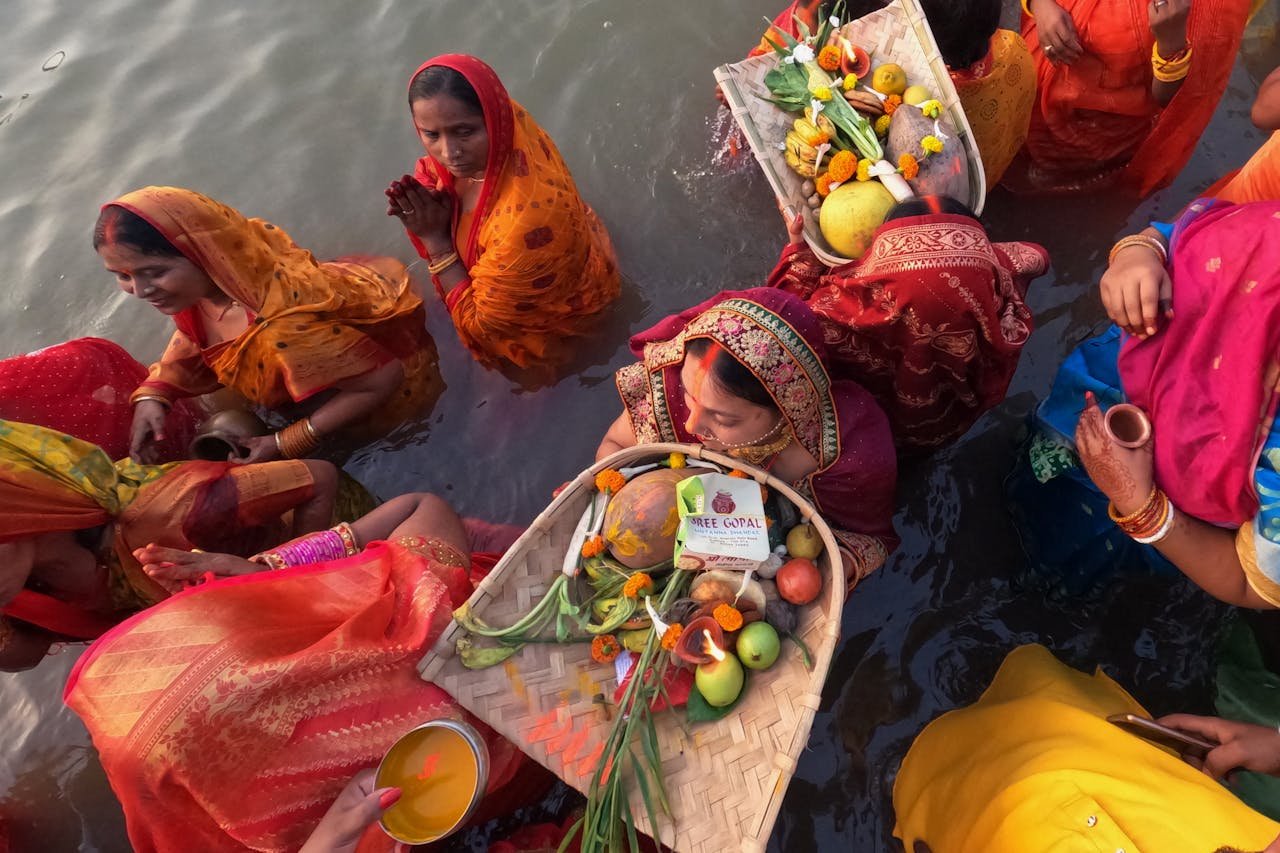
Unlike many other Hindu festivals which involve idols and temples, Chhath Puja is marked by rituals that directly engage with nature. The core of the festival revolves around offering prayers to Surya (the Sun God) and Usha (the goddess of dawn). The devotion that goes into these prayers, especially the rigorous fasting and the act of standing in waist-deep water while offering “arghya” (water offerings) to the Sun, symbolizes a deep connection to natural forces and the universe. This spiritual reverence towards nature makes Chhath Puja a powerful reminder of the intrinsic bond between humanity and the Earth.
The festival spans four days, during which devotees perform strict rituals in a bid to invoke divine blessings. What makes Chhath Puja particularly noteworthy is its focus on self-discipline, purification, and environmental consciousness. It is a festival that emphasizes personal devotion over grandeur, making it a truly spiritual experience.
The Days of Chhath Puja: Rituals and Ceremonies
Chhath Puja is a multi-day celebration, with each day marking a specific ritual and act of devotion. Here is a breakdown of the significant events:
1. Nahay Khay (Day 1)
The first day of Chhath Puja is called Nahay Khay, which literally translates to “bathe and eat.” On this day, devotees take a ritualistic dip in a river or any other water body to cleanse themselves of any physical or spiritual impurities. After the cleansing, they cook offerings that are prepared without using salt, onion, or garlic. This food is consumed on the same day as a mark of purification.
2. Lohanda and Kharna (Day 2)
The second day, known as Lohanda or Kharna, involves fasting until the evening. On this day, devotees prepare a sweet dish called “kheer” (a type of rice pudding), which is offered to the Sun at sunset. The fast is broken after the evening prayers, and the meal is shared with family members, symbolizing unity and gratitude. The devotees also prepare offerings, including the famous “thekua,” a sweet dish made from wheat flour, ghee, and jaggery.
3. Sandhya Arghya (Day 3)
The third day of Chhath Puja is the most important. It is called Sandhya Arghya, which involves offering prayers to the setting Sun. Devotees, dressed in traditional attire, gather by riversides, ponds, or other water bodies to offer arghya to the Sun. The offerings are usually made in a brass vessel, which contains fruits, flowers, and water, while the Sun is worshipped as the ultimate giver of life and energy. Devotees stand knee-deep in water, offering their prayers with devotion while the Sun sets in the horizon. This ritual marks the climax of the puja, as it involves a physical and spiritual dedication to the divine forces.
4. Usha Arghya (Day 4)
The final day of Chhath Puja is Usha Arghya, where the devotees offer prayers to the rising Sun at dawn. This is the most auspicious time of the festival, as it signifies new beginnings, hope, and the rebirth of life. Devotees again stand in water, offering arghya to the Sun, while seeking blessings for health, wealth, and prosperity for themselves and their families. The fast is broken after the ritual is completed, and the offerings are shared amongst the community.
The Spiritual and Cultural Essence of Chhath Puja
Chhath Puja is not just a festival; it is a celebration of values such as self-discipline, respect for nature, and deep spiritual connection. The rituals involved in the puja require significant physical effort and mental focus, which is why the festival is seen as a form of penance and purification. The act of fasting, standing in water for hours, and offering prayers with deep devotion brings a sense of spiritual elevation.
Moreover, the festival’s cultural impact is significant. People from all walks of life come together to celebrate, irrespective of their social status. The puja fosters a sense of community, as families, neighbors, and even strangers join in the rituals, reinforcing social bonds and cultural traditions. It is an event where people of different generations—grandparents, parents, children—participate together, passing down cultural knowledge and practices.
The festival also promotes environmental awareness. In recent years, Chhath Puja has become a platform for raising consciousness about water pollution and the importance of keeping water bodies clean. Devotees, while performing their rituals, often make efforts to clean the area around them, leaving the surroundings spotless. This aspect of the festival is increasingly seen as an opportunity to advocate for the protection of natural resources, especially in the face of growing environmental challenges.
The Role of Chhath Puja in Today’s World
In the modern world, Chhath Puja continues to thrive as a spiritual anchor. Amid the hustle and bustle of urban life, this festival offers an opportunity to disconnect from the distractions of daily life and focus on inner growth, gratitude, and reverence for the forces of nature. It serves as a reminder to be thankful for the Sun’s life-giving energy and to be mindful of our role in protecting the environment.
In recent years, Chhath Puja has spread beyond the Indian subcontinent, with a growing diaspora in countries like the United States, Canada, and the United Kingdom observing the festival with great zeal. With its strong emphasis on simplicity, devotion, and environmental consciousness, Chhath Puja resonates with many people who are looking for ways to reconnect with their roots and find deeper spiritual fulfillment.
The Future of Chhath Puja
As Chhath Puja gains prominence in global cultural and spiritual circles, it is poised to be more than just a regional festival. It stands as an embodiment of how ancient traditions can remain relevant in today’s world. In an era that increasingly emphasizes sustainability and environmental protection, Chhath Puja offers a powerful message: that spirituality and ecological consciousness can go hand in hand.
As urbanization continues to impact traditional festivals, Chhath Puja’s connection to nature becomes even more symbolic. For people living in cities, it’s an opportunity to reflect on the significance of natural forces and the need to preserve them. The rise in eco-friendly practices during the festival, such as using biodegradable offerings and cleaning riverbanks, shows that Chhath Puja has a future that aligns with contemporary concerns about environmental sustainability.